

Related smart contracts
Standardized tokens on TON (see TEPs 0074 and 0089) are implemented using a set of smart contracts, including:- Jetton master (that is also called Jetton minter) smart contract;
- Jetton wallet smart contract.
Jetton master
Jetton master smart contracts store general information about a particular jetton, such as total supply (the total number of tokens of this type), a metadata link (or the metadata itself) and a code of the standard jetton-wallet smart contract for this jetton. They also have an owner (admin) who, by sending suitable messages to them, mints new tokens, closes the minting, change metadata or transfers the admin rights to another contract. Jetton master contracts also receive notifications about the burning of tokens. When they receive such a notification, they must adjust the total supply accordingly.Jetton wallet
Jetton wallet smart contracts are used to transfer, receive, and burn jettons. Each jetton wallet contract stores wallet balance information for specific users (owner), address of Jetton master contract (for appropriate minting), and some additional information. In certain cases, Jetton wallets are used for individual token holders for each token type.Difference between Jetton wallets and regular ones
Although both regular wallets and Jetton wallets are smart contracts, there are some significant differences between them. The regular wallets smart contract are designed for off-chain interaction with their owner. In most implementations, their main purpose is to receive external messages and perform the operations requested in them. It is through a regular wallet that the user sends requests for the transfer of tokens or their burning to the Jetton wallet smart contract. They are designed to store only the native TON Blockchain currency: toncoins or TONs. On the other hand, Jetton wallets smart contracts are designed only for storing and processing tokens. They ignore any external messages and accept only special internal ones. They execute commands received only from the Jetton master, another Jetton wallet or their owner’s regular wallet smart contracts.Message layouts
Interactions with Jetton contracts, which are most often encountered by users and developers, are:- tokens transfer: sending tokens from one Jetton wallet to another;
- tokens minting: minting new tokens and transferring them to the Jetton wallet;
- tokens burning: burn a certain number of tokens on the Jetton wallet contract;
- wallet address providing: find the address of the Jetton wallet corresponding to a regular wallet.
query id field. Nowadays the field is almost deprecated, and protocols itself doesn’t need it.
It is mostly used for easier off-chain parsing and other web2 processing.
Token transfer
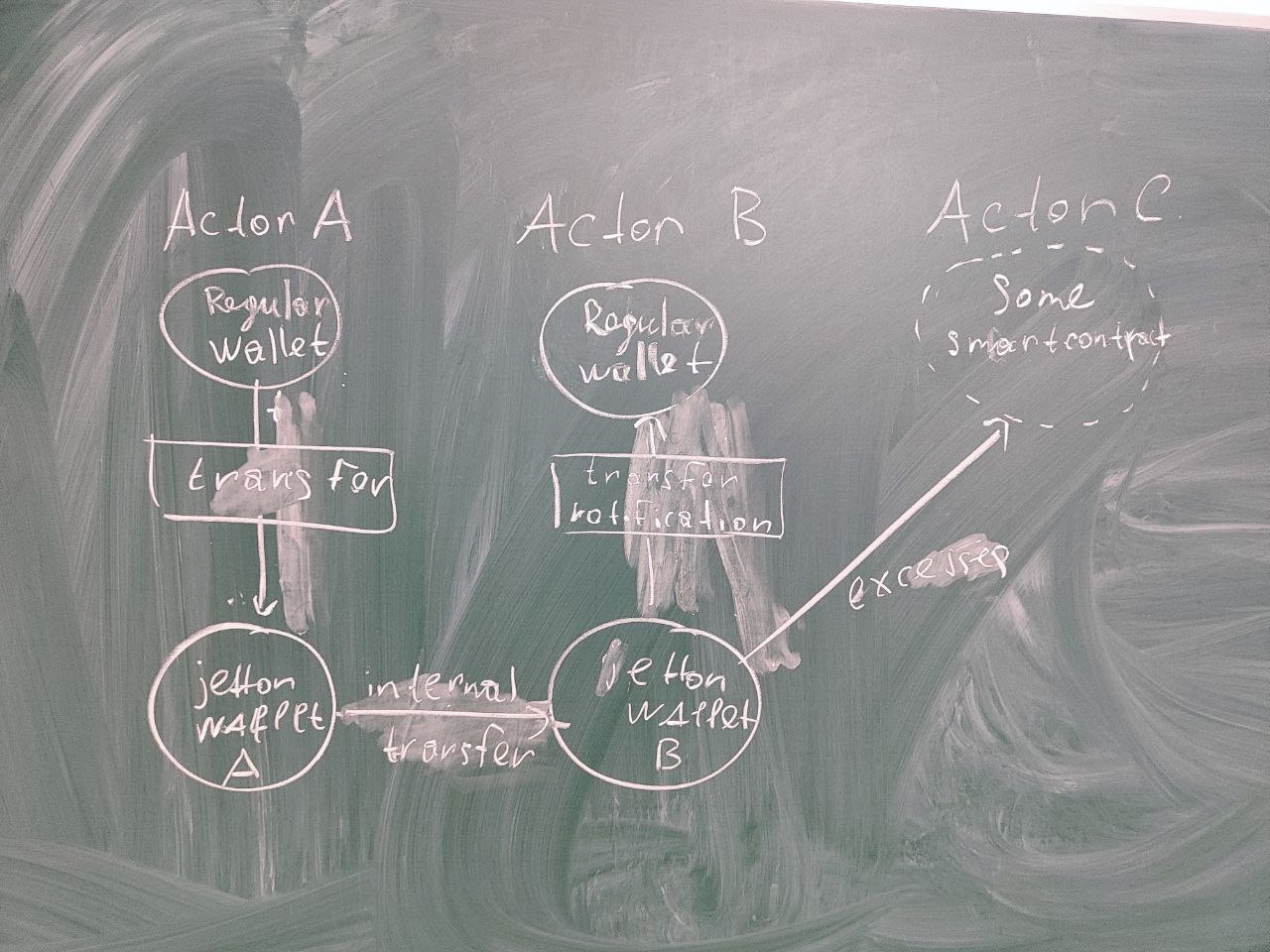
Actor A regular wallet -> actor A Jetton wallet. Transfer message contains the following data:
Actor A Jetton wallet -> actor B Jetton wallet. Internal transfer message contains the following data:
Actor B Jetton wallet → actor B regular wallet. The transfer notification message. This is sent only if forward_ton_amount is not zero and contains the following data:
Actor B Jetton wallet -> actor C smart contract. Excess message body. This is sent only if there are remaining Toncoin after paying the fees. Contains the following data:
Token minting
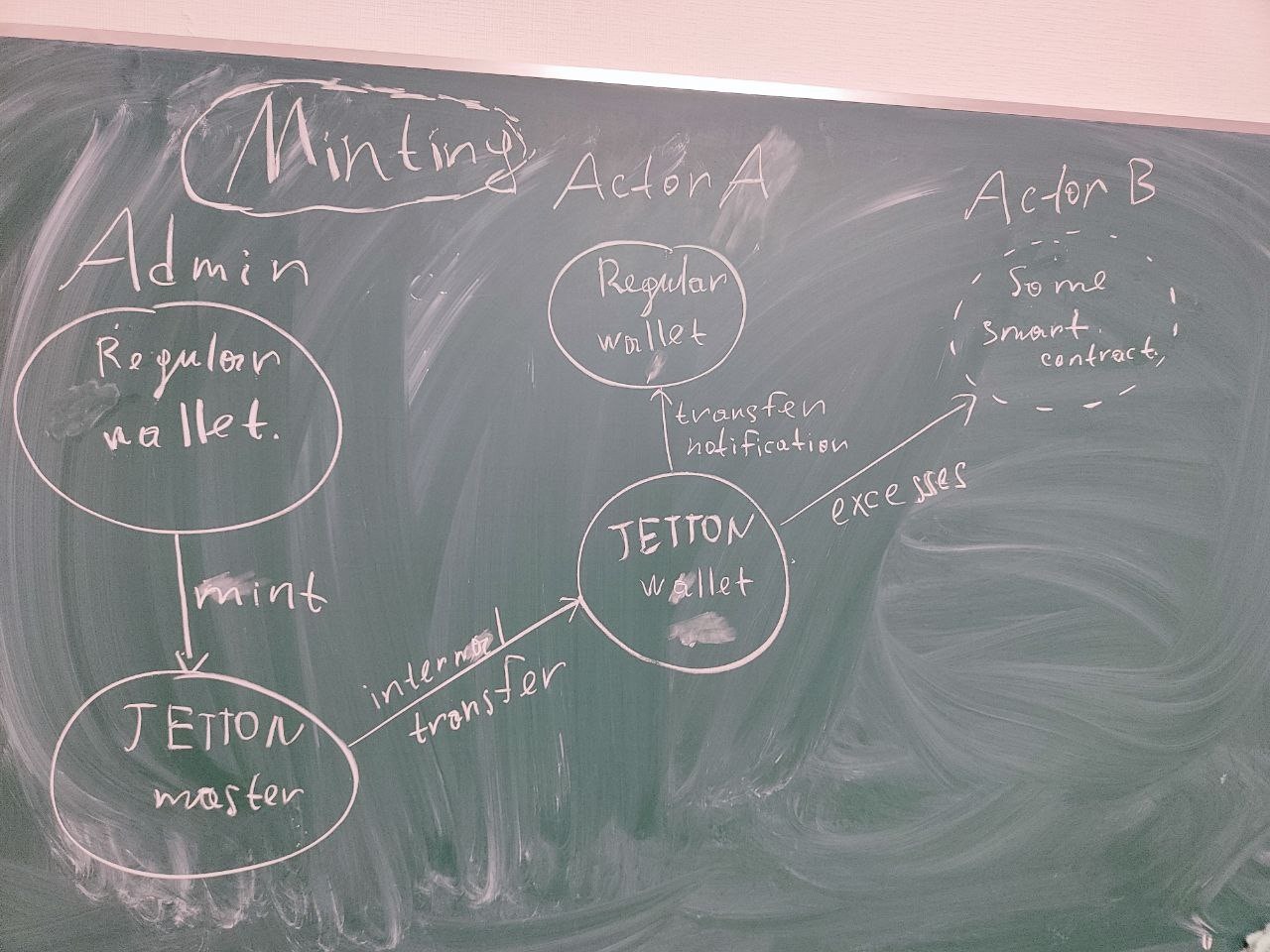
Admin regular wallet -> Jetton master contract. Mint message contains the following data:
The rest of the messages have already been described above when analyzing the transfer process.
Token burning
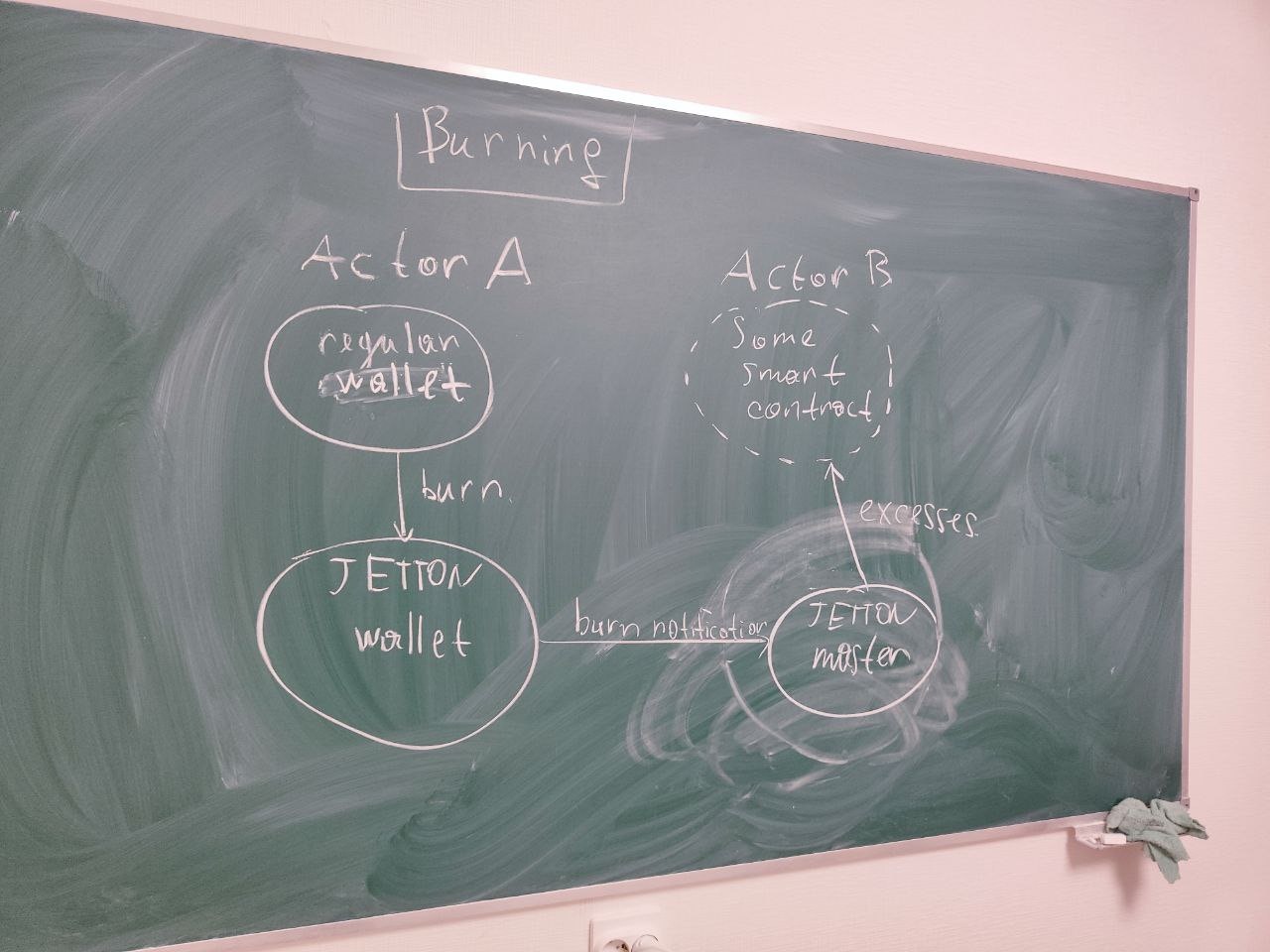
Actor A regular wallet -> actor A Jetton wallet. Burn message contains the following data:
Actor A Jetton wallet -> Jetton master contract. Burn notification message contains the following data:
Wallet address providing
This process is very simple. Some actor sends to the Jetton master contractprovide_wallet_address message that contains the following fields:
Then, the Jetton master contract sends to the actor a message that contains the following fields:
Interaction from UI
There are three actions that can be performed through the UI:- [getting wallet balance](how to: get balance);
- [transfer jettons](how to: transfer);
- [indexing available jettons](how to: listing).
Applications
The most popular user wallet applications, such as TonKeeper, use their own SQL-like database. When the user receives new jetton for the first time, the application processes thetransfer_notification message. Next, information about the number of jettons received is taken from it and it is
checked if there is information about this jetton in the applications database. If there is, information is added to the database stating that the user has a
new type of jetton in the amount received. If not, the database starts indexing this new jetton and after the validation process begins to show data
about it to users. This is how all the jettons that a given user has and their amounts are listed.
In order for a user to transfer a given amount of a token to another user, they only need to fill in the destination and amount
fields through the application. Next, it will automatically generate a transfer message and send it to the jetton-wallet smart contract associated with the user.